
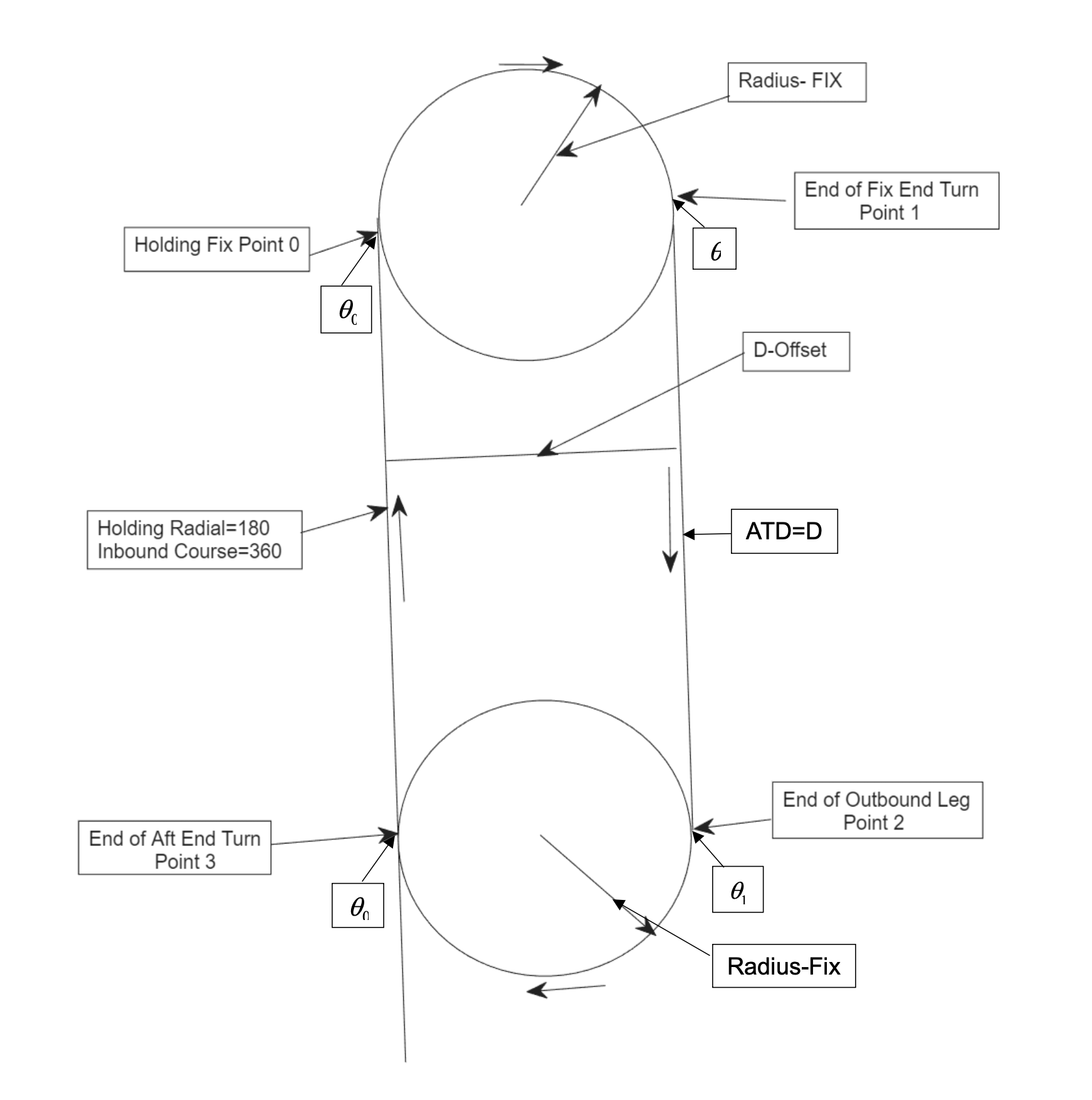
Most pilots think of a holding pattern as a simple racetrack. In high winds, that mental model breaks fast—unless you’re flying a constant-radius (RF-style) turn that intentionally varies bank angle to keep the ground track on a circle.
This white paper introduces a Variable Turn Rate (VTR) methodology for RNAV(RNP) holding and goes beyond “rules of thumb” by deriving the actual relationships that govern:
Bank angle + wind correction angle behavior around each semicircle (why bank is steepest downwind and shallowest upwind)
Roll-rate demands implied by a true constant-radius track—and what that means for real autopilots
Leg timing (including how to compute circuit time and the inbound ATD needed to meet an EFC requirement)
What a constant-radius “perfect racetrack” costs you in offset / airspace, especially as the wind speed ratio climbs
A practical comparison against MITRE bench-test data to infer how different FMS/autopilot systems likely manage RF tracking in the real world (hint: it’s not a perfectly smooth continuous-bank solution)
If you want the equations, the worked example, and the plots (bank angle / roll rate / wind correction vs. position around the turn), download the full PDF here: RNAV(RNP)_VTR_121925_Final.pdf